
You don’t need to
own a roof to go solar.
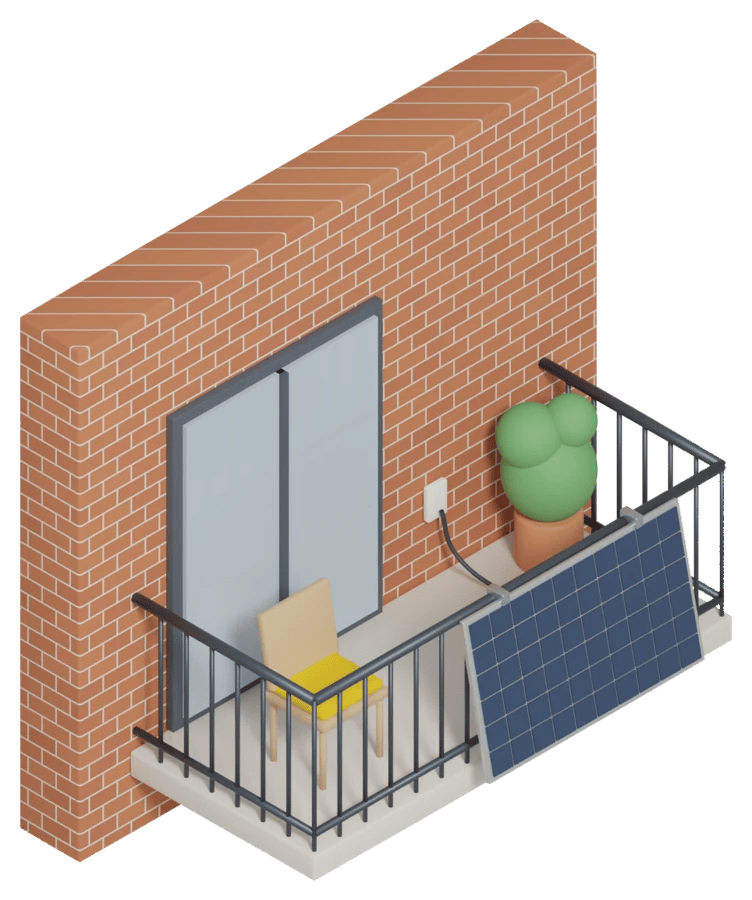
Plug-in solar (also called balcony solar) is a small panel that sits on your balcony or window ledge and connects to a regular wall outlet. It starts trimming your electric bill the day you plug it in, and you don’t need a roof, a permit, or an installer to get there. If you rent, it works just as well.
it’s now law
per panel
pays for itself
A year and a half ago, one state allowed this.
Now it’s nine, with two more deciding.
New Jersey became the ninth state on September 1, when Governor Sherrill signed the Garden State Balcony Solar Act. That leaves California and New York, both still waiting on a signature. Below: every law, the week it happened, and what’s still pending.
it’s now law
governor’s desk
to act on SB 868
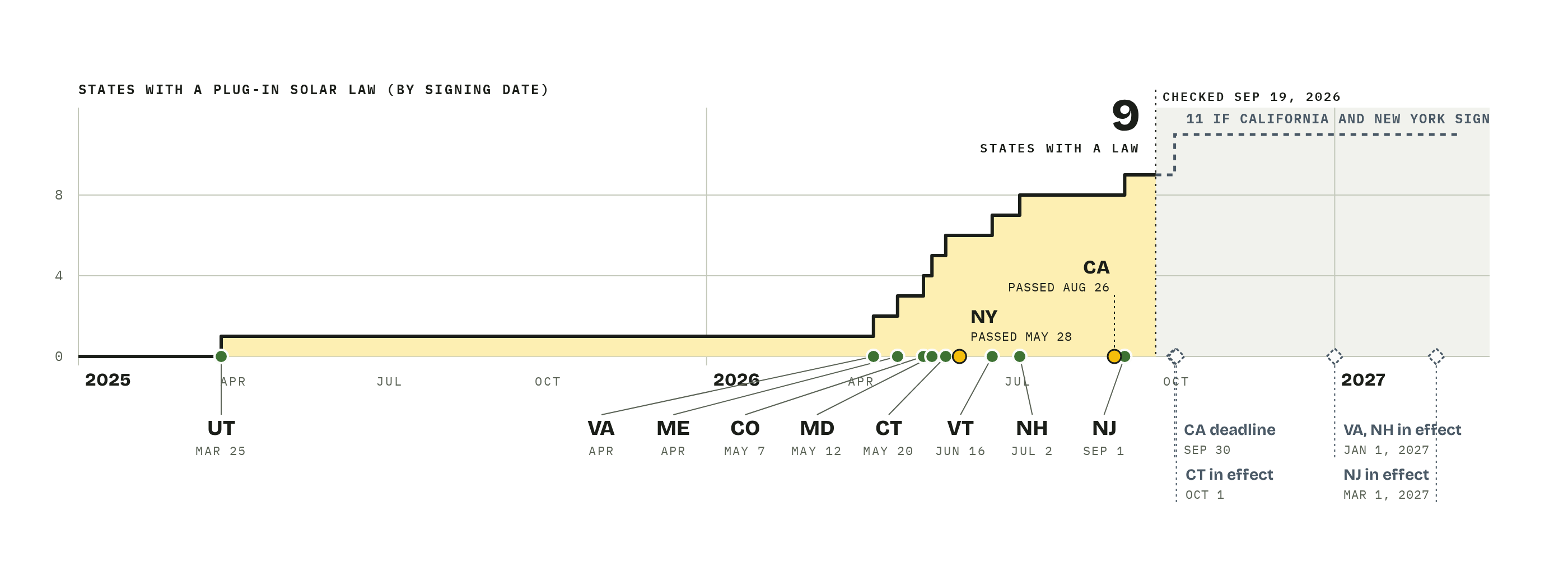
Signing dates per state records; Virginia and Maine approximate to the month. Count is enacted laws, not effective dates. Dotted projection assumes both pending bills are signed. Last verified September 19, 2026 · corrections
Full state tracker →The sun comes up for renters, too.
Curious what solar would look like at your address?
Type in your address and the Solar Advisor pulls a real aerial photo of your home, checks your sun exposure, confirms whether plug-in solar is legal where you live, and estimates what you’d save each month. It’s free, takes about 30 seconds, and never asks for your email.
What happens when you plug a panel in
There are really only four steps between sunlight and a smaller bill.
Sunlight hits the panel
The panel sits on your balcony railing, window ledge, or a ground stand. South-facing is ideal, but east or west works too. It just sits there soaking up light all day.
A microinverter converts it
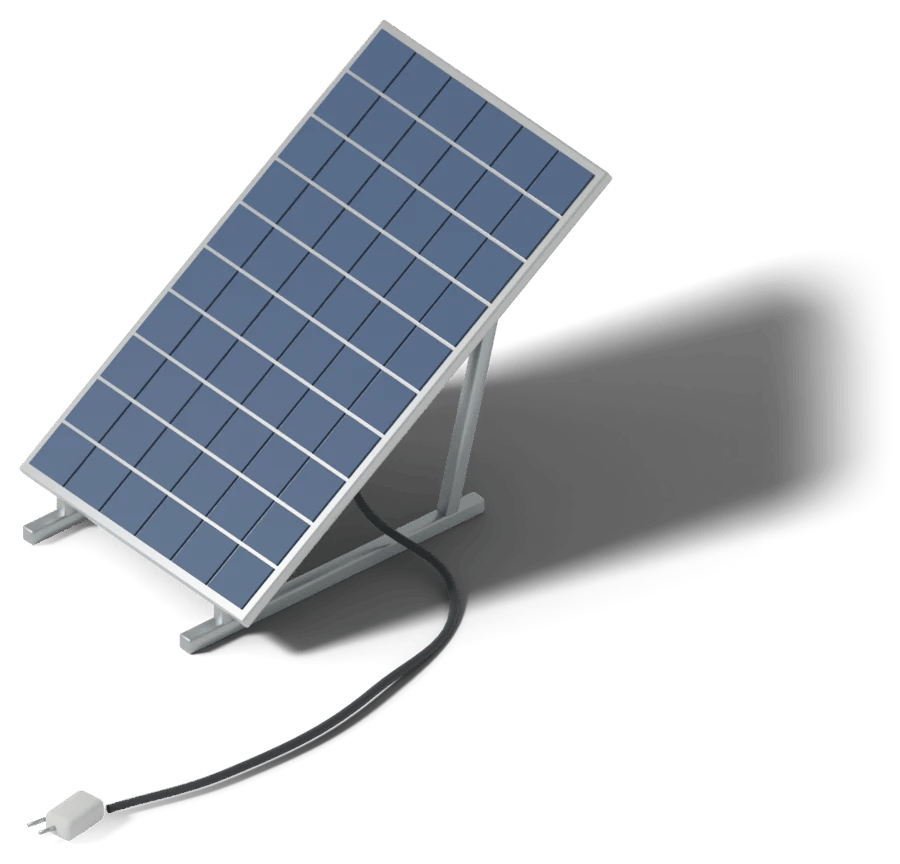
The panel generates DC electricity, and a small box called a microinverter (usually included in the kit) turns it into the same AC power your home already runs on. You don’t have to do a thing.
It plugs into a regular outlet
The cable runs from the microinverter to a standard outdoor or indoor outlet, the same kind you’d plug a lamp into. In most places that means no electrician, no rewiring, and no permit.
Your bill goes down
Whatever the panel generates is power you don’t buy from the grid. Most people see $5–$23 less per month per 400W panel, which isn’t dramatic, but it adds up, and the panels last 25+ years.
PBS NewsHour · They covered plug-in solar before most people had heard of it. The math has only gotten better since.
Where are you starting from?
Tell us which of these sounds like you, and we’ll point you at the parts worth your time.

So how much would solar save you?
Enter your address and we’ll check your local sun exposure and your state’s legality rules, then show you what you’d save and which kits fit your setup. It’s free, and we never ask for your email.
savings estimate
Once the math makes sense,
the next question is what to buy.
We looked closely at every complete plug-in solar kit sold in the US, and three earned a place here: the best hardware overall, our Amazon pick, and the one kit that works in all 50 states without a state law.

The numbers
A 400W panel generates about 54 kWh per month in average US sunlight. What that electricity is worth to you depends on what your utility charges, and that varies a lot.
kWh / month
Output of one 400W panel
at 4.5 peak sun hours / day
US average sun conditions
| State / region | Avg rate | Monthly savings | Payback |
|---|---|---|---|
| Hawaii | $0.42/kWh | $22.70 | ~2 yrs |
| California | $0.33/kWh | $17.80 | ~3 yrs |
| US average | $0.19/kWh | $10.30 | ~5 yrs |
| Midwest | $0.12/kWh | $6.50 | 9+ yrs |
Based on 54 kWh/month output (400W × 4.5 peak sun hrs × 30 days). EIA residential rates, June 2026. No federal tax credits currently available. Full methodology →
Laws & coverage
How solar-friendly is your state?
Nine states have enacted plug-in solar laws, and two more are waiting on a governor’s signature. Find your state below, or scroll on to see how much solar each one has installed so far.
Plug-in solar law enacted
No specific law yet
Bill pending
ME
VT
NH
WA
ID
MT
ND
MN
WI
MI
NY
RI
MA
OR
NV
WY
SD
IA
IL
IN
OH
PA
NJ
CT
CA
UT
CO
NE
MO
KY
WV
VA
MD
DE
AZ
NM
KS
AR
TN
NC
SC
DC
OK
LA
MS
AL
GA
HI
TX
FL
How much solar has each state installed so far?
Whether it’s legal is one question; whether people are doing it is another. This is cumulative installed solar capacity (utility-scale, commercial, and rooftop combined) by state, from the Solar Energy Industries Association’s state-by-state data, updated June 2026.
| Rank | State | Installed capacity | Homes powered | Share of electricity from solar |
|---|---|---|---|---|
| 1 | California | 55,510 MW | 16,271,789 | 38.0% |
| 2 | Texas | 53,568 MW | 6,564,561 | 11.4% |
| 3 | Florida | 21,968 MW | 2,619,359 | 11.3% |
| 4 | Arizona | 11,751 MW | 1,760,320 | 17.6% |
| 5 | North Carolina | 10,027 MW | 1,203,602 | 10.1% |
| 6 | Illinois | 8,290 MW | 1,278,181 | 4.8% |
| 7 | Nevada | 8,244 MW | 1,419,101 | 33.5% |
| 8 | New York | 8,226 MW | 1,388,401 | 7.7% |
| 9 | Georgia | 7,675 MW | 904,864 | 8.1% |
| 10 | Virginia | 7,569 MW | 859,526 | 9.5% |
| 11 | Indiana | 7,148 MW | 850,372 | 7.1% |
| 12 | Ohio | 6,182 MW | 769,555 | 4.6% |
| 13 | Massachusetts | 5,881 MW | 970,129 | 24.7% |
| 14 | Colorado | 5,687 MW | 1,204,548 | 14.2% |
| 15 | Utah | 4,675 MW | 867,577 | 15.3% |
| 16 | New Mexico | 4,291 MW | 1,061,477 | 17.8% |
| 17 | Arkansas | 3,938 MW | 465,938 | 8.1% |
| 18 | Wisconsin | 3,502 MW | 588,906 | 6.8% |
| 19 | Michigan | 3,193 MW | 542,526 | 2.8% |
| 20 | Maryland | 3,160 MW | 373,334 | 7.9% |
| 21 | South Carolina | 3,118 MW | 377,322 | 3.9% |
| 22 | Pennsylvania | 3,086 MW | 388,392 | 1.4% |
| 23 | Minnesota | 2,852 MW | 413,627 | 4.4% |
| 24 | Hawaii | 2,155 MW | 570,879 | 22.7% |
| 25 | Connecticut | 2,108 MW | 306,592 | 5.6% |
| 26 | Oregon | 2,029 MW | 267,549 | 5.2% |
| 27 | Louisiana | 1,954 MW | 201,905 | 2.8% |
| 28 | Maine | 1,952 MW | 367,595 | 17.8% |
| 29 | Mississippi | 1,915 MW | 207,472 | 3.5% |
| 30 | Missouri | 1,772 MW | 200,096 | 2.3% |
| 31 | Kentucky | 1,708 MW | 176,362 | 2.8% |
| 32 | Idaho | 1,301 MW | 186,899 | 9.0% |
| 33 | Rhode Island | 1,277 MW | 240,864 | 10.8% |
| 34 | Iowa | 1,232 MW | 160,652 | 2.5% |
| 35 | Tennessee | 1,206 MW | 123,283 | 1.9% |
| 36 | Alabama | 1,078 MW | 119,500 | 1.0% |
| 37 | Oklahoma | 842 MW | 105,048 | 1.1% |
| 38 | Kansas | 463 MW | 68,917 | 1.1% |
| 39 | West Virginia | 383 MW | 37,963 | 0.7% |
| 40 | New Hampshire | 380 MW | 57,382 | 2.1% |
| 41 | Montana | 369 MW | 52,612 | 1.7% |
| 42 | Delaware | 352 MW | 41,774 | 7.3% |
| 43 | Wyoming | 334 MW | 53,950 | 1.1% |
| 44 | South Dakota | 270 MW | 33,512 | 2.0% |
| 45 | Nebraska | 226 MW | 30,322 | 0.8% |
| 46 | Alaska | 35 MW | 4,250 | 0.3% |
| n/a | Vermont | data pending | 76,247 | n/a |
| n/a | North Dakota | data pending | 271 | n/a |
| n/a | New Jersey | data pending | 906,893 | n/a |
| n/a | Washington | data pending | 73,960 | n/a |
Source: SEIA state solar data, June 2026. Four states (New Jersey, Vermont, Washington, North Dakota) have incomplete capacity data as of publishing, shown below with partial figures only.
Current
Reporting on the new economics of solar, for renters, homeowners, and everyone in between. There are no ads here and nothing to upsell, just the numbers.

8 min read
Is plug-in solar actually worth it in 2026? We ran the numbers.
A single 400W panel can offset $5–$23 a month depending on your state’s electricity rate and sun hours. We built the math out in full, without marketing assumptions or best-case scenarios, so you can see what you’d save and how long it would take to break even.

5 states just made plug-in solar legal and easy. Here’s exactly what changed.
Utah, Maine, Virginia, Colorado, Maryland. What each law allows, and what it means for renters on the ground.
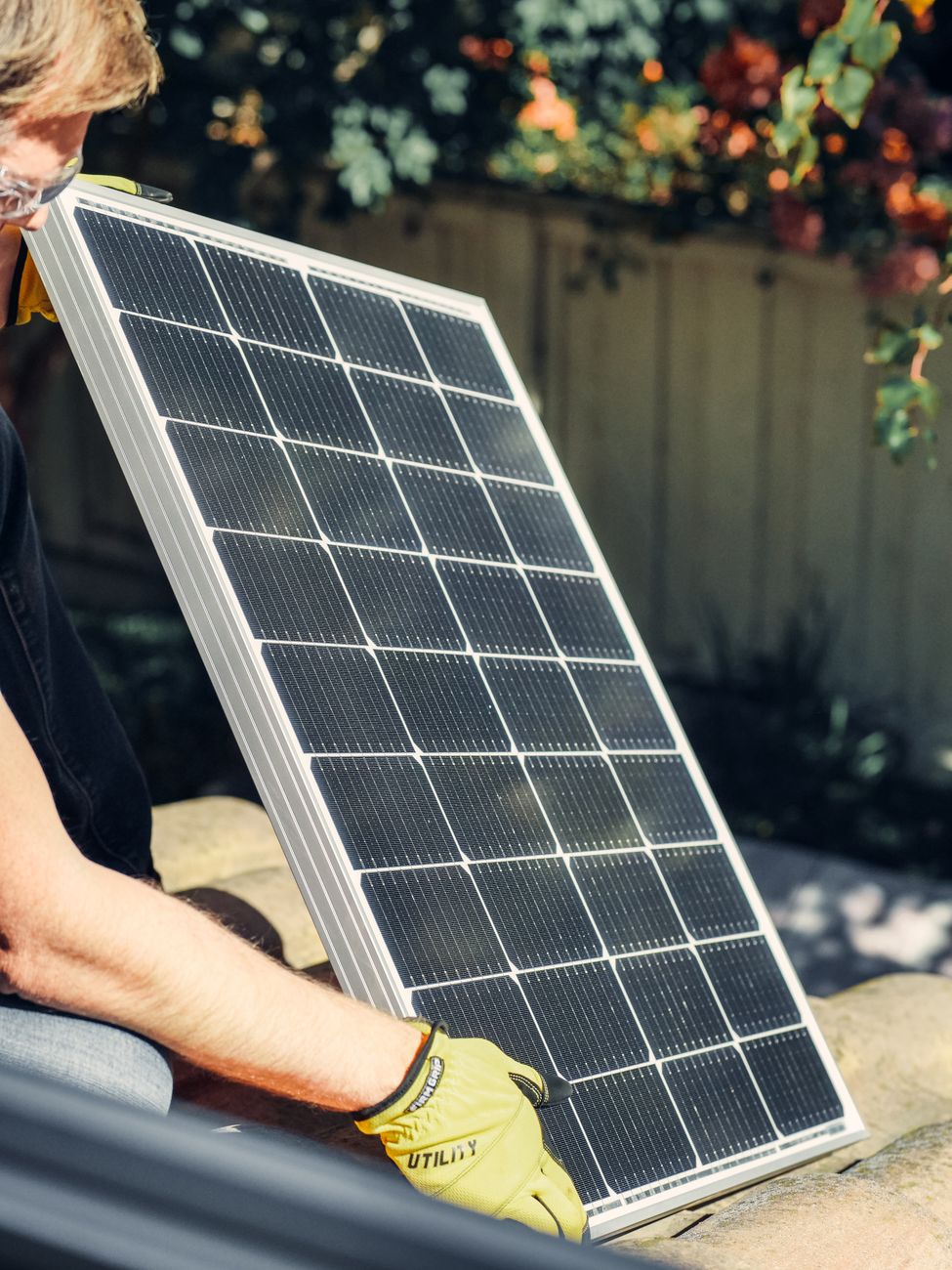
The kit guide for people who’ve never bought a solar panel in their life.
What to look for, what to skip, and why UL 1741 certification matters more than the wattage on the box.

What is plug-in solar, exactly?
How a panel the size of a door lowers your electricity bill without anyone touching a single wire.
The questions people ask us first
Answered the way we’d answer a friend.
Solar is no longer just
for homeowners.
It takes about two minutes, there’s nothing to sign up for, and you’ll leave with a real number for your situation.

